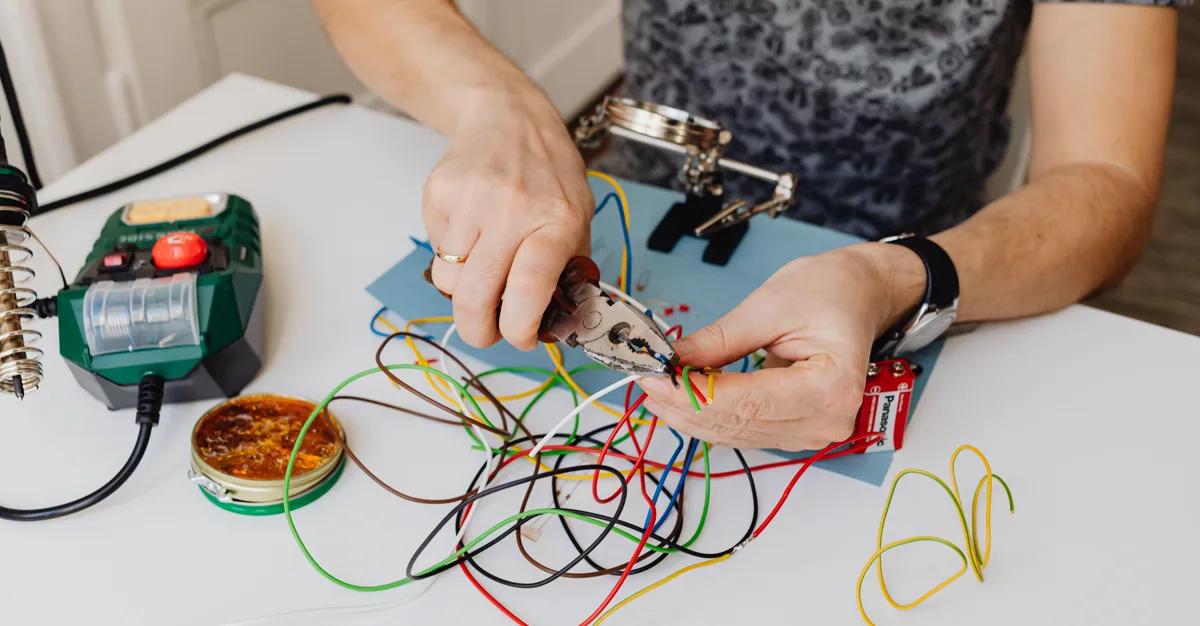
Six electrician websites, one of them showing a license number
We opened six electrician websites in July 2026 and checked each one for the same handful of things. Phone number, pricing, service area, credentials, proof. The results were mostly what you would expect, apart from one.
Exactly one of the six displays an actual electrical license number on the site. It is Wire Craft Electric in Waco, Texas, and the number sits in the footer: TECL#39682. It is also the smallest company of the six.
The two national franchises both talk about being licensed. Mister Sparky says its technicians are trained, licensed, insured and local. Mr. Electric refers to certified and highly trained electricians. Neither shows a number you could check. Nor do the three independents apart from Wire Craft.
That gap is the whole opportunity for a small shop, and it is worth understanding why the franchises can get away with it. Mister Sparky is trading on a national name and a registered trademark. You are not. When a homeowner has never heard of you, the license number is the fastest way to stop being a stranger, and it costs you nothing but the space it takes up.
Here is what the six sites look like side by side.
| Site | License no. shown | Pricing signal | Towns named | Reviews on homepage |
|---|---|---|---|---|
| Wire Craft Electric | Yes, TECL#39682 | No | Waco only | Named testimonials |
| Mel Carr Electric | No | "Affordable" in the headline | 13, individually | ANGI badge |
| Any Hour Services | No | Upfront, not hourly | 50+ | 24,000+ reviews |
| Kolb Electric | No | "Best value" | Many, across 3 states | Testimonial plus badges |
| Mister Sparky | No | StraightForward Pricing | Zip lookup | Five testimonials |
| Mr. Electric | No | Upfront estimate | Zip lookup | Rating widget showed 0/5 |
Wire Craft Electric: the license number in the footer
Wire Craft Electric runs a headline that does a lot of work in one line: an award winning electrical services company helping families since 2004. Twenty-plus years, stated, without a paragraph about passion.
The site names five service categories rather than thirty. Installation, repair, inspection, panel replacement, and fans, AC and heaters. For a shop this size that is the right call, because a list of thirty services from a small company reads as a list of things you have heard of rather than things you do every week.
The testimonials carry first names and last initials. Michael T., Angela M., Marianne L. That is a small thing that separates a real review from something written in the office, and it costs nothing to do properly.
The mechanism: put the license number on the site. If you are the only electrician in your town who does, you have a trust advantage over companies a hundred times your size.
Mel Carr Electric: the towns are in the headline
Mel Carr Electric in Albany does something almost nobody else does. The main headline names specific towns: fast and affordable electrical repair, installation and wiring in Latham, Colonie and beyond.
Most sites put the service area in the footer, or on a page called Service Area that nobody visits. Putting two town names in the biggest text on the page tells a homeowner in Latham that they are in the right place before they have read anything else, and it gives search engines the local signal in the strongest position on the page.
They also list thirteen towns individually. Albany, Amsterdam, Clifton Park, Colonie, Delmar, East Greenbush, Guilderland, Latham, Niskayuna, Saratoga Springs, Schenectady, Troy, plus the wider Capital District. Not "the greater Albany area". The actual names, which are the actual things people type.
The mechanism: if most of your work comes from two or three towns, put them in the headline. The phrase "and surrounding areas" has never earned anyone a job.
Any Hour Services: the best sentence about pricing on any of these sites
Any Hour Services in Utah writes the clearest thing about money we found across all six: they offer upfront pricing rather than charging by the hour, you know the cost before they start, and if the scope of work does not change, neither does the price.
That last clause is the part worth stealing. Every homeowner who has hired a trade has a story about a job that grew. Naming the condition under which the price holds is more convincing than any number of promises about honesty, because it tells people exactly what would have to happen for the number to move.
They also carry over 24,000 Google reviews, which is not a number a small shop is going to match. What is worth copying is the way they describe them, noting that so many of the reviews mention technicians by name. That reframes a volume number as a statement about individual people.
One criticism, and it is a real one. When we looked, the biggest text on the homepage was a promotion for a nineteen dollar furnace tune-up. Your headline is the most valuable space you own, and renting it to a coupon means the first thing a visitor learns about you is a discount rather than what you do or why you are worth calling.
The mechanism: write down the condition under which your price holds. It is more persuasive than the price.
Kolb Electric: a hundred years as the argument
Kolb Electric covers DC, Maryland and Virginia, and leads on longevity. The best value electricians since 1925, with a line about over ninety years of experience.
That is a genuine advantage and they are right to lead with it. The interesting thing is what sits underneath. There is no guarantee, no pricing promise beyond the phrase best value, and no license number. Instead there is a wall of third-party credibility: BBB accreditation, Angie's List Super Service Award, Best Pick Reports, and memberships in property management associations.
That last group tells you who they actually sell to. Property managers and commercial clients care about association membership in a way homeowners never will. It is a reminder that the right trust signal depends entirely on who is reading, and that copying another company's badges without knowing their customer is how sites end up cluttered with logos that persuade nobody.
The mechanism: pick trust signals for the customer you want, not the ones that look most impressive.
Mister Sparky and Mr. Electric: what the franchises buy with scale
Mister Sparky trades as America's On-Time Electrician, with a UWIN guarantee, a 100% satisfaction promise and something called StraightForward Pricing. All three are registered marks, which is the tell. They have turned ordinary service promises into brand assets, and that is a strategy available to a company with a legal department and not much use to anyone else.
Mr. Electric runs the same playbook with upfront transparent estimates and no hidden fees, plus a note that it serves over 100,000 customers a year. Both use a zip code lookup to turn a national brand into a local one, which is the central problem a franchise site has to solve and one you do not have.
Worth flagging one thing on Mr. Electric, because we see it constantly on sites that cost far less. When we pulled the page, the star rating rendered as 0 out of 5. A visitor in a normal browser almost certainly sees the real number, because the widget loads separately after the page arrives. Anything that does not wait, including some of the tools now summarising websites for people, sees a zero. If your social proof depends on a script finishing, it is not always there.
The mechanism: do not let your reviews depend on a widget loading. A number written into the page always renders.
What to copy this week
Six sites, and a short list of things any electrician can do without hiring anyone.
- Put your license number on the site. Five of six do not. It takes one line and it is the single clearest way to prove you are legitimate.
- Name your towns in the headline. Mel Carr does it and it costs nothing.
- Write the condition on your pricing. Any Hour's sentence about scope is better than a number.
- Use first names on testimonials. Wire Craft does. Anonymous praise reads as invented.
- Write your review count into the page. Not into a script that might not finish.
- Keep the headline for what you do. Not for this month's promotion.
None of that is design work. It is six sentences and a number, which is usually the case with trades websites. We wrote up the same exercise for a different trade in our breakdown of plumbing website examples, and the pattern held there too: the sites that win are not better looking, they answer more questions.
If you only do one thing. Add your license number and the towns you cover to the top of your homepage. That is ten minutes of typing, it puts you ahead of five of the six sites in this article, and it is the exact information a homeowner is looking for when they decide whether to call you or keep scrolling.
Two technical notes worth having in the back of your mind. Google indexes the mobile version of your site rather than the desktop one, which its mobile-first indexing documentation sets out plainly, so the phone version is the real version. And if you display reviews, display genuine ones, because the FTC's endorsement guides are specific about testimonials that are not.
If you want the full list of what belongs on an electrical contractor's site rather than just what these six do, we keep that on our electrician website design page, and our breakdown of small business website costs covers what any of it should cost.